
London Tech Week
London Tech Week: Keeping People at the Centre of Technological Change
Three days at London Tech Week left me thinking about the space between rapid technological change and the deeply human work of preventing homelessness.
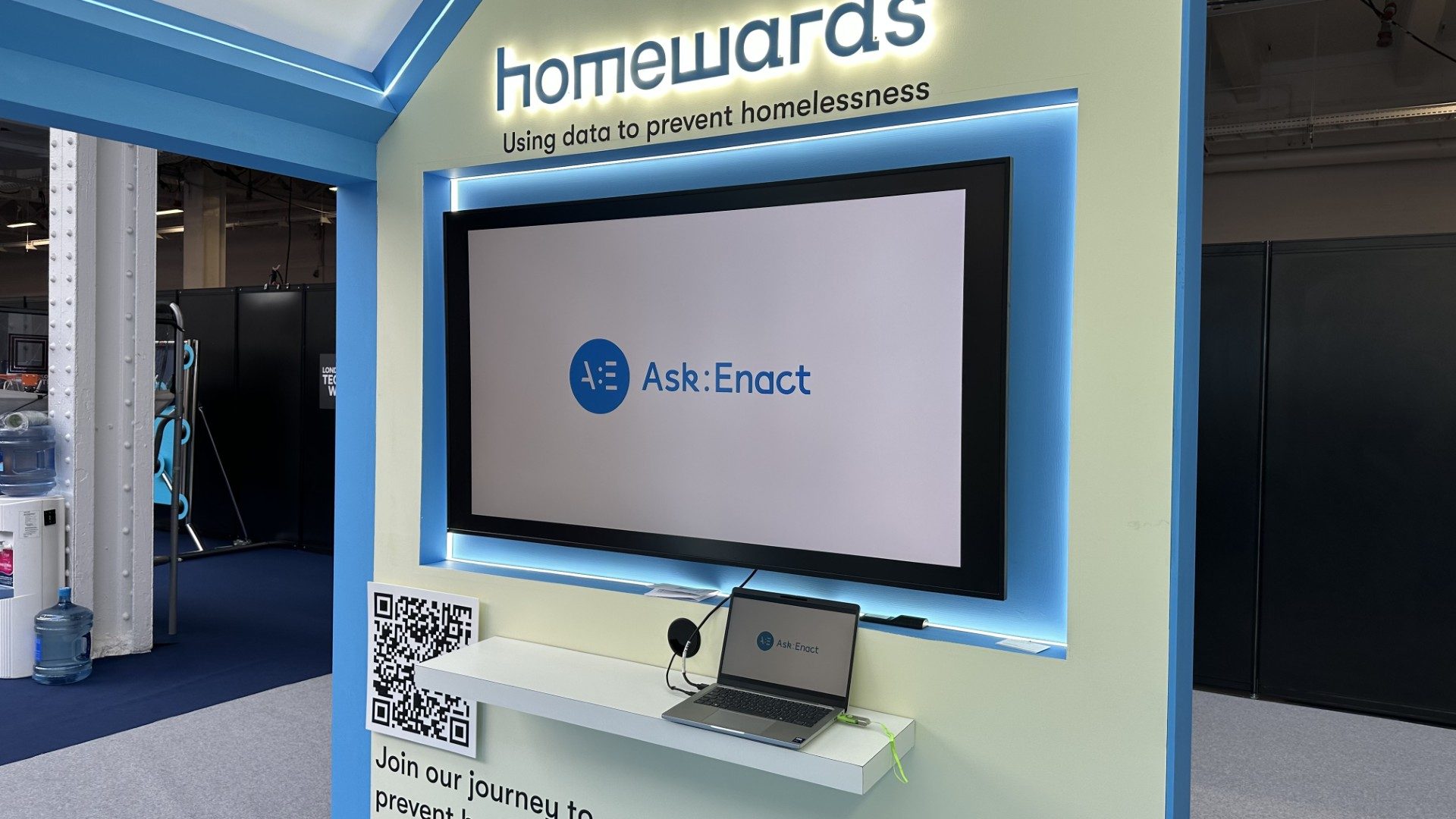
There was AI everywhere. Across the stages, exhibition areas and conversations, companies were presenting new products, models and platforms, each seeking to establish its place in what feels like a significant new technological era.
The pace of change was hard to ignore.
Yet my main reflection was not about a particular model, product or technical breakthrough. It was about the challenge of connecting this rapid technological development with some of the most complex and human circumstances people experience.
That is the space in which we are developing Ask:Enact.
Changing lives through technology

On Tuesday 9 June, I had the opportunity to pitch Ask on the Ignition Stage as part of Changing Lives Through Tech: Innovations to Prevent Homelessness.
The session was hosted in partnership with Homewards and the Venture Studio from Crisis and moderated by Ezechi Britton MBE, co-founder of Collectively Better.
Alongside presentations from Housing Perks, Husmus and Grand Bequest, I shared the thinking behind Ask:Enact and the work taking place in Aberdeen.
Our aim is to support frontline professionals to recognise housing insecurity earlier, ask relevant questions and take practical prevention action.
Many professionals regularly come into contact with people who may be at risk of homelessness. They might work in policing, healthcare, social work, justice, education, housing or the third sector.
However, housing will rarely be the main reason for that interaction.
Someone might be speaking to a police officer because of a disturbance, attending a healthcare appointment, receiving support with their mental health or discussing financial pressures. Housing insecurity may sit underneath the immediate issue without being recognised or discussed.
This is one of the gaps Ask:Enact is intended to address.
The technology can help a professional think through the situation, identify possible signs of housing risk and understand what action they can take. However, the conversation still belongs to the professional and the person they are supporting.
Connecting data, services and people
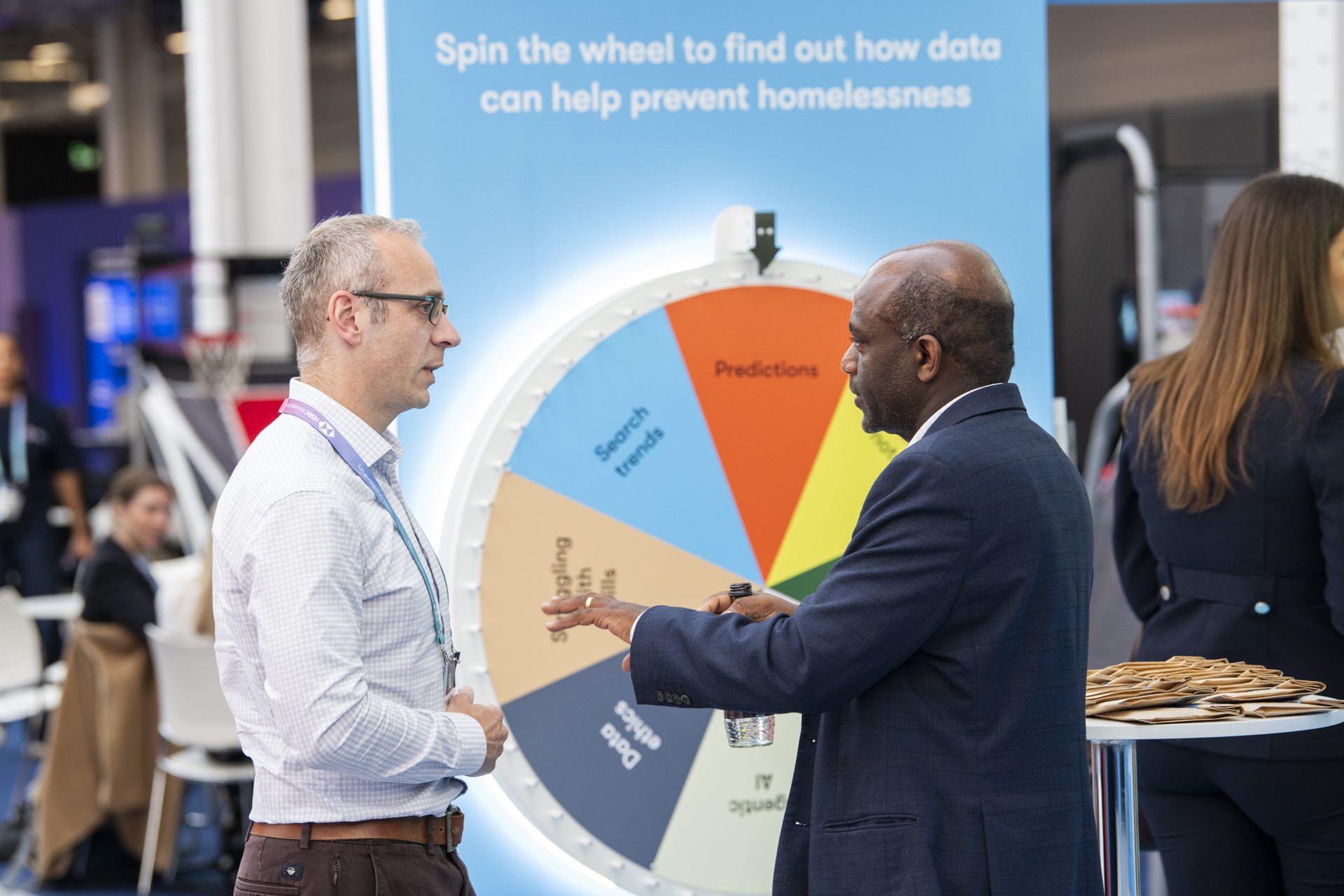
The following morning, I attended Connecting the Dots: How Data, Technology and Partnerships Can Prevent Homelessness on the Founders Stage.
The panel was moderated by Dr Sabrina Cohen-Hatton KFSM, Chief Fire Officer of Hampshire & Isle of Wight Fire and Rescue Service, and featured Liz Choonara, Executive Director of Commerce & Enterprise at Crisis; Dan Hughes, Founder of Alpha Property Insight; Rhema Vaithianathan, Professor at Auckland University of Technology; and Dr Mihretab Melesse Salasibew, Director of Evidence at the Centre for Homelessness Impact.
Having worked in homelessness and related services for more than two decades, much of the discussion resonated with me.
People experiencing homelessness often face multiple and overlapping pressures. These can include poverty, insecure employment, poor health, trauma, abuse, relationship breakdown, involvement with the justice system and difficulties accessing services.
No single organisation can respond to all of those issues.
One service may hold part of the picture. Another may recognise a different concern. In many cases, nobody can see the full pattern until the situation has reached a crisis.
This is why collaboration matters.
We have an opportunity to close some of the gaps between organisations through responsible data sharing, stronger partnerships and a clearer understanding of what the available information is telling us.
That does not mean collecting data for its own sake. Nor does it mean attempting to remove professional judgement by handing decisions to an automated system.
It means using data to ask better questions.
Where are people repeatedly reaching services without receiving the support they need? Which combinations of circumstances are associated with increasing housing risk? Where are referral routes failing? Which interventions appear to work, and which groups are still being missed?
Good data should help organisations understand those patterns and improve their response.
Following the session, I spoke with Dr Mihretab Melesse Salasibew, Director of Evidence at the Centre for Homelessness Impact. We discussed where our work aligns and the potential for evidence and data to support earlier intervention.
These conversations matter because preventing homelessness cannot sit within one organisation, profession or technology product. It requires shared learning and a willingness to connect work taking place across different parts of the system.
Presenting Ask to Prince William
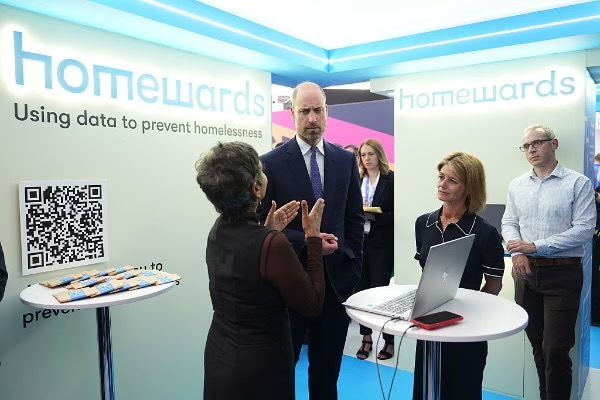
Later that day, I had the privilege of presenting a demonstration of Ask:Enact to Prince William on the Homewards stand.
We discussed how Ask:Enact can support frontline workers to ask questions earlier and deliver more consistent prevention activity.
The current system often depends heavily on the knowledge, confidence and experience of the individual professional. Some will know exactly what to ask, where to refer someone and what responsibilities apply. Others may recognise that something is wrong but feel less certain about what they can do.
Ask:Enact is intended to reduce that uncertainty.
It can provide practical guidance during or following an interaction, helping professionals identify housing concerns, consider related risks and understand the next steps available to them.
We also discussed the wider value of the information generated through those interactions.
When professionals record recurring issues, barriers and support needs, that information can help us understand patterns that may otherwise remain hidden across separate services.
Over time, this will contribute to the wider Homewards mission of making homelessness rare, brief and non-recurring.
I was keen to make the point that the success of this work will depend on human interaction, trust and professional judgement.
A system can suggest a question, highlight a concern or provide information. It cannot replace the relationship between a professional and the person in front of them.
The role of technology in this particular space should be to support people to make better-informed decisions, not to remove their responsibility for making them.
I believe that message was received.
A difficult but important space
My honest reflection on London Tech Week is that Ask:Enact sits in a difficult but important space.
We are trying to connect some of the most human and complex factors in people’s lives with the fastest period of technological change we have experienced.
There are clear opportunities.
AI can make large amounts of guidance easier to use. It can help professionals find relevant information more quickly. It can support more consistent conversations and identify patterns across data that would be difficult to see manually.
But there are also serious risks.
Poorly designed systems can oversimplify people’s circumstances, reinforce bias, provide incorrect advice or create a false sense of certainty. Data can be taken out of context. Organisations can become focused on what is technically possible rather than what is useful, ethical or safe.
We should not ignore those risks in the rush to adopt new technology.
For Ask:Enact, the challenge is to use AI without losing sight of the people at the centre of the work. That means designing around real professional practice, testing with frontline workers and being honest about what the technology can and cannot do.
It also means recognising that better technology will not fix fragmented systems on its own.
Services still need clear pathways. Organisations still need to collaborate. Professionals need time, confidence and permission to act. People need access to practical support before their circumstances become an emergency.
Technology can support that work, but it cannot replace it.
Not tackling the challenge alone
Although the scale of the challenge can feel considerable, the week also reminded me that I am not trying to tackle it alone.
I met people from charities, public services, technology companies, research organisations and social enterprises who were all considering different parts of the same problem.
Some were focused on data. Others were developing tools for tenants, landlords or local authorities. Others were working on evidence, investment or new forms of collaboration.
The approaches were different, but there was a shared recognition that current systems too often respond after someone has reached crisis.
There is a growing appetite to change that.
I was also struck by how many people visited the Homewards stand throughout the three days. Some already understood the programme, while others wanted to know why homelessness was being discussed at a major technology event.
The interest created an opportunity to explain that homelessness is not an isolated housing issue. It connects with health, employment, poverty, justice, education, public services and the way organisations use information.
Huge respect is due to the Homewards team, who worked tirelessly across the week to speak with visitors, explain the Homewards Data Lab and communicate the wider ambition of the programme.
Their presence ensured that homelessness prevention was part of a much larger conversation about the future of technology.
What comes next
London Tech Week reinforced my belief that data and technology can support homelessness prevention.
It also reinforced the need to approach that opportunity carefully.
The aim should not be to automate human judgement or reduce complex lives to a set of risk scores. It should be to give professionals better information, greater confidence and clearer options so they can act sooner.
The task ahead is to build technology that works with people rather than around them.
That will require continued testing, challenge and collaboration. It will require input from frontline workers, people with lived experience, researchers, service leaders and technical specialists.
Most importantly, it will require us to keep asking a simple question:
Does this help someone recognise a problem earlier and take meaningful action?
If the answer is yes, technology may help us move from reacting to homelessness towards preventing it.